Showing posts with label science. Show all posts

Thursday, April 24, 2014

Toothpick tripod: microwaving butter without melting it

toothpick tripod method butter microwave without melting puddling Josef Spalenka
The Toothpick Tripod Method of Microwaving Butter

Have you ever wondered how to soften butter in the microwave without it melting?

Softening refrigerated butter in a microwave to make it instantly spreadable has been a challenge to humanity for more than half a century. The inherent difficulty of microwaving butter is so well known that it was recently illustrated in a popular webcomic by The Oatmeal. Microwaving butter resting directly on a plate results in partial melting and puddling. Additionally, the time window between spreadably soft butter and mostly liquid butter is very narrow, and is highly variable depending on the microwave oven used, the size of the butter pat, and the material composition of the plate.

I am pleased to announce that this butter softening challenge has finally been solved.

I recently noticed that the initial puddling phenomenon always starts at the bottom of the butter pat where it contacts the plate, but the plate itself does not necessarily get hot and cause the melting. Even starting with a refrigerated plate results in melting from the bottom of the butter pat first. My idea was to elevate the butter pat above the plate, using toothpicks as shown in the above image, to avoid contact with the plate and hopefully achieve even heating without melting. I call this "The Toothpick Tripod Method" of microwave butter softening.

A tripod was chosen because it is the most efficient method to form a stable elevated support, with minimal surface area contact to the butter, and it is suitable for a butter pat of any shape. A bonus byproduct of this method, is that it also solves the problem of variable heating between different microwave ovens. Using the toothpick tripod method, you can simply set the microwave for any sufficiently long length of time, and then carefully watch the microwave until the buttery tripod softens and falls down under its own weight. The result is perfectly spreadable butter with no melted liquid, every time.

Try it for yourself!

Sunday, April 6, 2014

Science Cats! Volume 2

This is a continuation of the Science Cats! theme I started last month. If you enjoy these, feel free to share them with friends and family, and make suggestions or requests in the comments.

Rutherford scattering experiment 1911 Science Cats! Chloe cat Josef Spalenka
Illustration of the classic Rutherford scattering experiment in which alpha particles (helium nuclei) elastically scatter from the nuclei of gold atoms (elastic scattering means the lighter α particles bounce off of the heavy Au atoms like billiard balls without losing their speed). In 1911, Ernest Rutherford used this experiment to prove that most of the mass of an atom is tightly concentrated in a tiny core nucleus in the atom, falsifying the previous "plum pudding model" of the atom in which the electrons are dispersed throughout a smeared-out positive spherical volume like blueberries in a muffin. The Rutherford Model for the atom was later updated in 1913 by the Bohr Model, which begins to hint at the first quantum mechanical picture of the atom. In this incarnation of the Rutherford scattering experiment, Chloe serves as the source of α particles.

Nicolaus Copernicus science cats heliocentric heliocentrism Jan Matejko Josef Spalenka
Polish astronomer and mathematician Nicolaus Copernicus formulated and published the heliocentric model in the first half of the 16th century, forever changing how humanity viewed its relationship to the Cosmos. The awe and majesty of this newly expanded cosmic perspective was beautifully captured in this 1873 oil painting by artist Jan Matejko (also Polish). In the foreground of the painting, Chloe plays with a rope and a random wooden pulley thing, completely oblivious to beauty and grandeur of the rest of the universe.

Antoine Lavoisier Marie-Anne Pierrette Paulze chemistry Chloe science cats Josef Spalenka
Chloe disrupts a tender moment between Antoine Lavoisier and his wife (and scientific collaborator) Marie-Anne Pierrette Paulze. Lavoisier is widely considered to be the founder of modern quantitative chemistry. He recognized and named the elements oxygen and hydrogen, predicted the existence of silicon, debunked the widely-held but incorrect phlogiston theory of combustion and oxidation, and played a major role in constructing the metric system. In spite of his incredible and far-reaching contributions to humanity, he was summarily guillotined in the aftermath of the French Revolution and overshadowed by politicians and war heroes in the history textbooks. So it goes.

Science cats Chloe Robert Goddard rockets rocketry liquid-fueled Josef Spalenka
"Professor Goddard does not know the relation between action and reaction and the need to have something better than a vacuum against which to react. He seems to lack the basic knowledge ladled out daily in high schools." -New York Times editorial from January 13, 1920, which was famously retracted in 1969 after the Apollo moon landing. Robert Goddard was ridiculed by the unimaginative fools in the press throughout his career and as a result kept much of his groundbreaking work private. His liquid-fueled multistage rockets were major milestones in the development of rocketry and the advance of space exploration.

If you liked these, be sure to check out Science Cats Volume 1!

Saturday, March 15, 2014

Science Cats! Volume 1

Isaac Newton white light spectrum optics cat chloe Cosmos Josef Spalenka
Sir Isaac Newton and assistants explore the visible light spectrum, refraction, and optics in 1666.

I am making a series of pictures celebrating the history of science and technology by inserting our cat, Chloe, into photoshopped science-themed images. They mostly represent themes in the new episodes of Cosmos: A Spacetime Odyssey. I will periodically add more pictures to this gallery as new episodes of Cosmos air on television, and as I think of new ideas (or get any interesting requests). Enjoy the science cats!

Watson and Crick DNA double helix model 1953 Chloe cat science Josef Spalenka
Chloe, Watson, and Crick demonstrated the first correct model for DNA in 1953. Francis Crick points at the double helix model while James Watson and Chloe look on. Rosalind Franklin (not pictured) provided crucial X-ray diffraction evidence, but sadly was not awarded a share of the 1962 Nobel Prize with the pictured scientists.

Chloe cat Cosmos Albert Einstein pipe smoke Josef Spalenka
Chloe and Albert have a contemplative smoke break together and think about the theoretical implications of curved space-time.

transistor electronics 1948 William Shockley John Bardeen Walter Brattain Bell Labs Chloe Cat Josef Spalenka
The September 1948 cover of Electronics Magazine showing the inventors of the first transistor in their workshop at Bell Labs: John Bardeen (background with glasses), Walter Brattain (right with mustache), and William Shockley (seated pretending to work). The three men would later share the 1956 Nobel Prize in Physics. The development of the semiconductor transistor ignited the computer revolution and directly led to the domination of cat pictures on the internet. Shockley later founded Shockley Semiconductor in Mountain View, CA, effectively establishing Silicon Valley.

Marie Curie radioactivity radium polonium Chloe cat science cosmos Josef Spalenka
Marie Curie discovered the radioactive elements radium and polonium in 1898, the latter of which was named after her native homeland of Poland. She shared the 1903 Nobel Prize in physics with her husband, Pierre Curie, the French physicist Henri Becquerel, and their mischievous lab cat Chloe.

Tiktaalik chloe cat science evolution Neil Shubin Cosmos Josef Spalenka
*boop* Chloe travels 375 Million years back in time and encounters Tiktaalik, an excellent example of a transitional fossil which has mixed characteristics of both fish and tetrapods. As Chloe learned in the excellent book, Your Inner Fish (written by Tiktaalik discoverer Neil Shubin), the anatomy and physiology of both cats and humans shares much in common with their fishy ancestors.

gravitational lensing effect cat galaxies Hubble Chloe Josef Spalenka
A pair of distant cat's eye galaxies are magnified and distorted by the gravitational lensing effect of the Large Red Galaxy (LRG 3-757) in the foreground.

cation cat Chloe carbonate Cosmos "dichloe carbonate" Josef Spalenka
Artist's depiction of dichloe carbonate ions in solution. Originally made for Cosmos episode 2: "Some of the Things That Molecules Do."

Chloe cat Cosmos Helix Nebula space FOX Purrrfect Josef Spalenka
Chloe the cat in front of the Helix Nebula, which is used in the Cosmos logo.
Originally made as a cheesy ad for Cosmos episode 1: "Standing Up in the Milky Way."

Chloe cat science cats! cardboard space shuttle Atlantis costume Halloween Josef Spalenka
The photograph that inspired this series. Chloe inside my cardboard Space Shuttle Atlantis costume from Halloween 2011 in Madison, Wisconsin.

I hope you enjoyed these images of our cat, Chloe, reveling in the wonders of science and exploring the Cosmos! Let me know in the comments if you have any ideas or requests for future "Science Cats!" images, and I can add them to Science Cats Volume 2. And feel free to copy, link, and share with your friends, family, and coworkers!

Monday, March 10, 2014

Save the Rainforest with Genetic Engineering

rainforest genetic engineering exotic wood marquetry plantation agriculture by Josef Spalenka

Everyone wants to "Save the Rainforest," but how can it be done most effectively? The current method of protecting ecologically and biologically diverse areas of the tropical rainforest is basically to convince governments to draw an imaginary fence around them, and protect what's inside the fence with a police force and the court system. Since the rainforest is still so vast, and the resources for policing its destruction are comparatively small, it is nearly impossible to protect all of the world's remaining rainforest from the constant nibbling of unlawful clearing by what are essentially small bands of rainforest "tree poachers."

Rather than using threat of criminal punishment, or campaigns of global shame and opprobrium, it is much more effective to change the economic incentives that drive the clearing of the rainforest. The first thing to realize is that people don't clear rainforest because they are stupid or evil or ignorant of its beauty (or because they have a blood feud with toucans). People clear rainforest because there are personal economic incentives to do so.

What are the main economic drivers for clearing the rainforest? One primary driver (particularly in Brazil) is to claim new land area for grazing cattle and raising agricultural crops, and the second primary driver is the harvesting of exotic wood species such as mahogany and teak for luxury export.

Much has been written on how to change the economic incentives for claiming forested land for cattle grazing and agriculture, such as convincing people globally to eat less beef, changing the tariffs on imports and exports to dis-incentivize the production of Brazilian beef and other agricultural products grown on former rainforest soil, and using technology to dramatically improve the efficiency of food production elsewhere so that it is impossible profitably produce food on the lower fertility soils of cleared rainforest. These are all important economic ideas, but I want to focus instead on alternatives to harvesting exotic trees for timber.

Supplying the luxury wood market with a cheaper alternative that fills the same essential need is the best way to reduce demand pressure on "the real thing."

Currently, valuable exotic wood grows sparsely and inaccessibly sprinkled throughout remote locations the forest, rather than in dense accessible clusters of the most valuable and prized trees. The most efficient way right now to select the few valuable logs from the rest of the lower-value surrounding greenery is to slash down all of it, and pick up the wheat from the chaff. I suggest that new exotic tree farming practices situated in less remote locations, combined with genetically modified exotic tree-stock that can grow well in regions that are not considered critical rainforest habitat, could meet the demand for the exotic wood market without threatening ecologically diverse protected areas.

Harvesting exotic wood species from untouched old-growth rainforest is extremely economically inefficient, and almost any alternative source would be cheaper. Exotic wood species did not evolve to grow as fast as biologically possible, because natural trees must always "hedge their bets" against temporary resource scarcity and devote nutrients towards defense mechanisms against competing species. There is no clear reason that the woods prized for bar-tops and luxurious conference room tables can only grow only in the poor soils of a rainforest, decorated and bejeweled with exotic parrots and iridescent insects. They could be cultivated and nurtured in a separately managed tree farm with a minimal number of symbiotic animal and insect species required for them to thrive. It seems reasonable to believe that a fast-growing, densely clustered "artificial" exotic tree crop could be engineered to have essentially the same hardness, color, and grain structure as the "natural" exotic wood it mimics.

Compared to our ancient experience with cultivating domesticated grain and vegetable crops, humans are currently just at the dawn of cultivating forest products for the purposes of renewable paper production and construction lumber. The spread of these practices from the abundant and well-known wood species of North America to the obscure and exotic wood species of the rainforests in South America, Africa, and Indonesia seems like a natural extension. Commercial teak plantations, for example, already exist in a few tropical regions and hopefully more exotic wood plantations are soon to follow.

Historic Georgetown, Colorado denuded of trees for use as fuel (top).
And Georgetown today with much of the local forest restored (bottom).

Some readers may be skeptical that such wicked things as big business and the machinations of the global industrial economy can actually prevent the destruction of sensitive ecological habitat, rather than being its primary cause. However, there is historical precedent for this. Many people don't realize, for example, that the forests of North America and Europe are on average thicker and denser today than they were a century ago. This was not primarily because of new regulations and new breakthroughs in arboreal police enforcement. It was because wood is no longer so useful as a fuel, and it has been largely replaced by more efficient and cheaper alternatives. The 20th century addiction to cheap and energy dense fossil fuels, far from accelerating the overall destruction of forests worldwide, has to a large degree saved and restored them.

Interestingly, the people who are most concerned about the loss of the rainforest and loss of biodiversity are often the same people who are most worried and fearful about genetic engineering and intensive farming. I hope we can eventually advance the global conversation and come to some agreement that there are ways in which responsible genetic engineering and widespread industrial tree cultivation could be a potential savior of natural biodiversity in the wild.

Thursday, February 13, 2014

Why is 3D Binaural Sound So Damn Relaxing?


Sometimes when I'm having trouble sleeping, I listen to 3D binaural sound (also known as holophonic sound) to help clear my mind of racing thoughts and finally fall asleep. Binaural sound is a special type of audio recording that uses two microphones embedded in the locations of the ears in a dummy head. When listening to this holophonic recording through a pair of earbuds or headphones, the result is a compelling illusion that the recorded sounds are located in 3D space around your own head. Listening to the recording without earphones doesn't work and ruins the auditory illusion. These types of audio recordings elicit an ASMR response in many people: a pleasant tingling sensation in the scalp and neck. After listening to many of these recordings of rain storms, of a virtual barbershop, of a woman crumpling pieces of paper, and most recently of a guy slowly opening a box containing bubble wrap and a bag of sand...I wondered. Why is lying in the dark with my eyes closed, listening to a guy slowly opening a cardboard box, such an utterly relaxing experience? Why does it help me sleep and clear my mind?
Am I a crazy person?


 Binaural recording of a cardboard box being slowly unwrapped


I think the reason listening to these binaural recordings is so relaxing is because it closely approximates the practice of mindfulness meditation. As I understand it, mindfulness is essentially training your mind to let your present sensory experience wash over you, without judging it or interrogating it with chattering thoughts. One of the payoffs of this attentiveness to the present moment is that it allows you to escape, if only for a short while, from your anxiety about past mistakes, and from your worries about the uncertain future. It is very difficult to be envious of your neighbor, to be angry at your spouse, to be stressed about your job, or to agonize about money while lying in a dark and silent room just listening to a guy...slowly and carefully unwrap a cardboard box.


As I was recently reminded by an astoundingly clear-sighted lecture by Sam Harris, most of us spend our whole lives thinking mostly about the future and about the past, without ever truly connecting with the present moment. We get expensive University degrees, and get jobs to earn lots of money, and invest money over decades into a retirement account in the anticipation that we will achieve happiness at some distant point in the future. I guess listening to a binaural recording in the quiet secret spaces of the night is a tiny way to set all of that aside, and to be contented with the present moment for just long enough to be taken by the sweet embrace of sleep.


A poetic excerpt from the Sam Harris lecture "Death and the Present Moment"

Sunday, January 27, 2013

Islamic Astronomer from the Istanbul Old Book Bazaar


I bought this picture of an Islamic astronomer at the Istanbul book bazaar during our honeymoon in Turkey last summer.  It is a single page out a of a book that must have once contained many such treasures.  Although the text is printed and likely mass-produced (the back side of the page is also completely covered in Arabic text), the image itself is hand-painted.  Some of the smallest lines are so delicate, I think they were painted with strokes from a single hair.  Although it is not obvious in the scanned image, the telescope and the borders are done in a metallic gold paint that reflects light brightly when held at certain angles.  I have since framed it and it now resides in my office, but I felt like it was too beautiful not to share with a wider audience.  My guess is it is perhaps about 150 years old, but I really have no idea of its true age, or what the text says.

Saturday, December 15, 2012

Yerkes Observatory: A Wisconsin Science Temple

Did you know the world's largest refractor telescope is located in southern Wisconsin? The Yerkes Observatory was built in 1897 in Williams Bay, on the northern shore of Lake Geneva, Wisconsin.  Although it is now past its prime for making major astronomical discoveries, today it is a really neat museum and education center.  Danielle and I visited it last year, and I thought I would record a few interesting photographs and tidbits here that might not be found on Wikipedia (where you can go and learn that the Observatory and nearby Frozen Lake Geneva were used as filming locations for Chain Reaction (1996), starring Keanu Reeves and Morgan Freeman).  They typically only provide free tours of the observatory on Saturday mornings, so you have to plan ahead a little bit if you want to visit.


The main telescope itself is quite impressive in scale, as you can see compared to the spiral staircase in this photograph.  Don't leave your jacket in the car if it is a cold morning, because the dome is kept unheated.  This is both because it would be too expensive to heat the dome, and to improve the astronomical viewing conditions by avoiding the atmospheric turbulence that would be caused by warm air escaping the open dome by convection.


Even Albert Einstein (middle right) managed to make a pilgrimage to the Yerkes Observatory in 1921.  It is obvious by comparing this photograph to the previous one that the floor is at different levels with respect to the bottom of the dome.  The entire floor in the room is actually a giant elevator.  Depending on the angle of the telescope, the viewing end changes height.  The solution that the engineers devised is to raise and lower the floor to reach the business end.  The electric motors that lift the floor elevator are still in working condition, and you can ride it up and down on the tour.


Here is a picture of one of the massive counterweights and pulleys that helps raise and lower the floor of the observatory.  There are several of these distributed around the circumference of the room.

Yerkes Observatory telescope elevator floor counterweights

The architectural details are fantastic and full of astronomical symbolism, some of which will be described by the tour guide.  It is pretty neat how the lobby hasn't changed very much from how it was at the end of the 19th century.


If you take a tour, make sure to keep an eye out for Spiderman hanging out in the rafters of the dome!


Friday, November 16, 2012

Grafene stropicciato

Ieri sera, ho ascoltato un seminario di Jiaxing Huang, un professore di chimica e scienza materiali alla Northwestern University.  Ha parlato di l'interazione tra ossido di grafene e superfici liquide.  La mia parte preferita del seminario è stato sul soggetto del grafene stropicciato.  Il grafene stropicciato è fatta da soffiando goccioline di aerosol attraverso un forno.  Le goccioline di aerosol diventano più piccoli durante l'asciugatura, schiacciando il grafene.  Grafene stropicciato ha una superficie molto grande, e possibili applicazioni per elettrodi di batterie.

grafene stropicciato


Sunday, November 11, 2012

Stephen Pinker: la tabula rasa

Mia moglie cominciato a leggere "The Blank Slate" di Stephen Pinker.  Questo libro è uno dei miei libri di saggistica preferiti.  L'autore descrive il comportamento umano con la lente di evoluzione.  Forse, il libro ispirerà molti interessanti conversazioni con mia moglie.


"The Blank Slate" (2002) by Stephen Pinker


Friday, October 19, 2012

X-ray riflettività

Oggi, ho imparato la tecnica della x-ray riflettività.  In questa tecnica, x-rays sono riflessi ad angoli di incidenza piccoli.  Se ci sono sottili strati molto lisce, ci saranno frange di interferenza.  Dalla spaziatura delle frange, possiamo imparare lo spessore del film.  Ho imparato moltissimo sul nostro diffrattometro. Adesso, sto facendo una scansione per sedici ore.  Sarà interessante vedere i risultati!


Saturday, October 6, 2012

Sabato Scienza

Questa settimana, ho mostrato dimostrazioni scientifiche per bambini.  Ho costruito un nanotubo di carbonio fatto da palloncini neri.  Ho spiegato i materiali di carbonio, per esempio diamante, grafite, C60 "Bucky balls," oltre a nanotubo di carbonio.  Le altre dimostrazioni hanno incluso folio di loto (che respingono l'acqua) e nanoparticelle d'oro.  Spero che i bambini hanno imparato qualcosa e si sono divertiti!  Invito tutti esplorare il mondo di nano.


-- Josef Spalenka

Tuesday, October 2, 2012

James Randi: "Un Bugiardo Onesto"

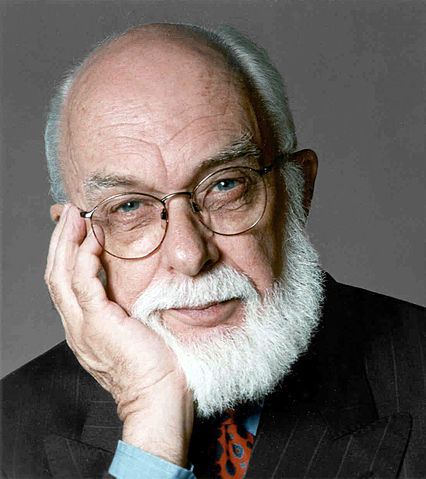
Ho scoperto questa mattina che un film documentario sarà prodotto sul soggetto di "The Amazing James Randi."  James Randi è un illusionista, uno scettico, e uno scrittore.  Per decenni, ha sfatato miti e scienza falsa.  Lui è un eroe!  Il film si chiama "Un Bugiardo Onesto," o in inglese "An Honest Liar."  Questo film mi fa molto piacere.  Aspetto con impazienza il film.

Ecco una foto di James Randi:


Ecco un'anteprima del film:


-- Josef Spalenka

Monday, October 1, 2012

Scrittura la scienza è difficile

Scrittura la scienza è molto difficile.  Ci sono tanti dettagli piccoli!  Tutte le parole devono essere vero!  Tutte le figure devono essere perfetto!  Dobbiamo non scrivere troppo noioso!  Tutti i riferimenti devono essere corretto!

Ho sempre lotta con procrastinazione.  Per la verità, sto scrivendo questo post del blog per più procrastinare.  Devo tornare al lavoro...


aggiornamento:  Ho finito il manoscritto e lo ha inviato via e-mail al mentore.


Sunday, September 30, 2012

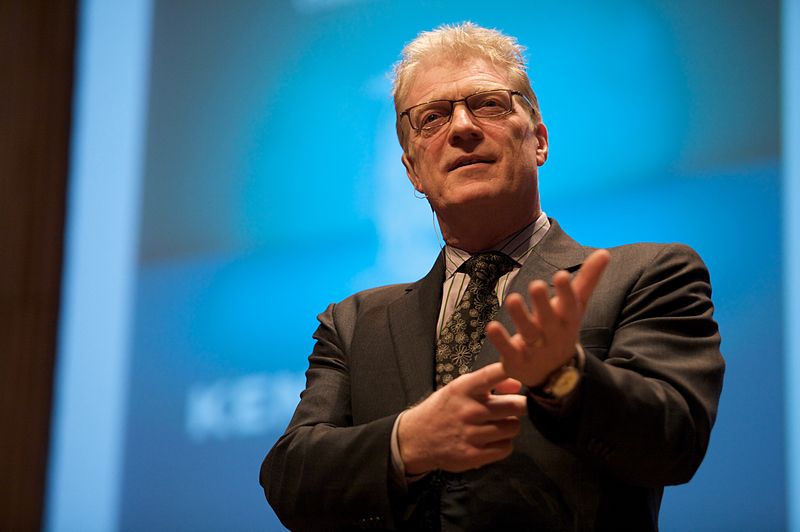
Sir Ken Robinson: la creatività, la verità e la bellezza

Questo pomeriggio, abbiamo ascoltato un discorso di Sir Ken Robinson.  È un esperto nell'educazione, è stato dal Regno Unito, originariamente.  Ha parlato su come migliorare la creatività nel sistema educativo.  È stato anche molto divertente!

Tuttavia, credo che la creatività, mentre è molto importante, i classici metodi di apprendimento, per esempio memorizzazione meccanica, ripetizione e la practica sistematica sono importanti anche.  Credo che dobbiamo tutti anche avere conoscenze elementari di matematica, scienze, lettura, scrittura, storia, e le arti, insieme a coltivando la creatività.


-- Josef Spalenka

Thursday, September 13, 2012

Sindrome impostore

Provo "sindrome impostore" frequentemente.  So di avere molte competenze, ma spesso mi sento come se io non so nulla.  Questo è comune tra gli studenti universitari della scienza.  Mi sentirò domani più bene.

--Josef--


Wednesday, September 12, 2012

Pranzo scientifico

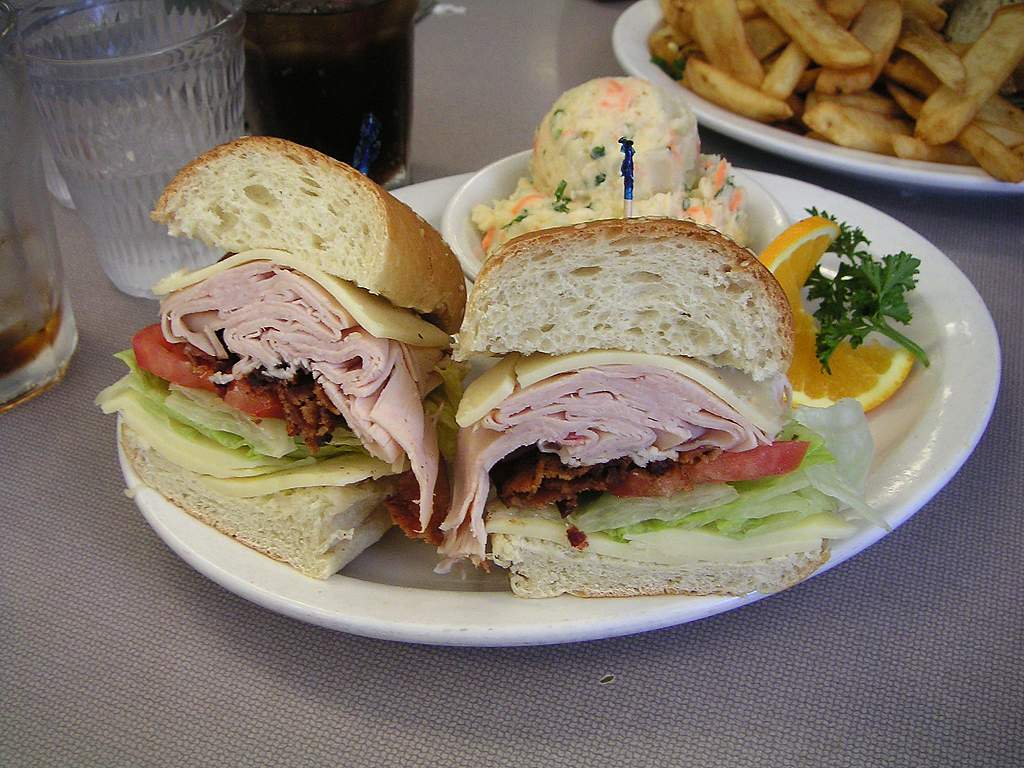
Oggi, ho pranzato con un professore di chimica e cinque studenti.  Il professore viene dalla Università del Colorado.  Abbiamo parlato di strati sottili dalla deposizione strato atomico (ALD).  Era discussione molto interessante.  Inoltre, il cibo assaggiato molto buono.  Ho mangiato un panino con carne di manzo, formaggio fuso, cipolle grigliate e aioli rafano.  Pranzo era buono, ma troppo costoso!

--Josef--