Showing posts with label learning. Show all posts

Sunday, January 19, 2014

The Art of Learning New Tricks as an Old Dog: feedback and taking lots of turns

It becomes increasingly difficult to learn new things as an adult. I am convinced, however, that this observed fact is not because the adult mind is less adept at learning than it was during childhood or adolescence. It is instead because adults have, over the course of their lives, developed a complicated web of phobias, bad habits, and misconceptions about themselves that puts barriers in the way of learning new things.

"Portrait of an Extraordinary Musical Dog" by Philip Reinagle (1805)

By the time you reach around 30 years old, it is easy to simply conclude that it's a matter of genetic destiny that you are no good at certain skills and never will be. You simply say "I can't draw," or "I can't write well," or "I'm no good at Spanish," and leave it at that. Once that type of self-talk becomes part of your identity, and you become "the sort of person who can't draw or write well," it is so easy to spend the rest of your remaining life self-fulfilling that prophecy. You will never bother to get even 10% better at drawing, or writing, or speaking español through the power of deliberate practice the way you might have when you were a foolish and uninhibited youngster.

The best way to learn something is to try it out and fail miserably, get feedback and advice from an expert source on how to do it a little better next time, and then take another turn. Take lots of turns. This is why it is valuable for everyone to try to learn a musical instrument at some point in their lives. Music learning teaches the power of deliberate practice over a long period of time, and the results of practice are apparent in a particularly objective way for music compared to other complex creative skills. When you started learning music you probably couldn't clap a tricky rhythm, and then you worked at it deliberately for a while, and then you could do it a little better, and eventually it was flawless and automatic. The progress over time for musicianship is obvious because many typical practice exercises on rhythm and pitch can be "right or wrong" in a way that has no easy analogue for more subjective creative tasks such as acting, writing, storytelling, painting, or filmmaking. Once you prove that you can use deliberate practice to improve your music skills, you can use that success to apply deliberate practice to anything.

On Taking Lots of Turns

I recently started reading The Improv Handbook-The Ultimate Guide to Improvising in Comedy, Theatre, and Beyond, by Tom Salinsky and Deborah Frances-White. My initial reasoning for wanting to study the techniques of improvisational theatre is that I could use the ideas and apply them towards having better telephone conversations, answering and asking better questions at job interviews, thinking faster on my feet, and delivering better speeches in public.

However, as I started reading the Improv Handbook, I came across a series of passages that described the barriers to learning new things that are endemic in adults, barriers to learning any new thing.  I found the following passages so wonderful and compelling that I will quote them here in full:
...The words "Can I have a volunteer?" often ignite feelings of fear and anxiety. People who have paid to be at [a] class, or have sometimes paid for three years of drama school, will often avoid eye contact with the teacher when the request is made.
It is not always like this, however. On some occasions, if a volunteer is asked for, every single person puts their hand up and some actually rush forward. That's when those people are children.
Children approach playing games, or doing exercises or being given the chance to try something new, very differently from adults. Children approach these situations with one mission, and that mission is to have lots of turns. They sometimes actually rate their success that way, saying something like "I had four turns and Charlie only had three—I win!"
Adults are very different. We want to sit back, assess—from our seats!—whether we'd be any good at the task in question. If we think we'd be successful at it, then and only then will we want a turn. If we think it is something we would not be good at, we would usually prefer to have no turn at all.
Children want lots of turns, but adults want one perfect turn.
As adults, we've already decided what we're good at and what we're bad at, and we only want to have turns at things we're already good at. We've met lots of people who've told us they can't draw, but none of them was seven. All children think they're brilliant artists and want their drawings displayed on the refrigerator. As adults, even if we secretly think we can draw, we hide our sketches away under the bed: "Don't look at those—they're just some silly things I was doodling." The thing is, we all were those children. We believed we were great artists, we sang and danced when we were happy and acted out cops and robbers for hours. No one ever stopped and said "I'm not a very good robber. I've run out of ideas. I think I need to research my character." We always had endless ideas. Endless positivity. Endless faith in our own talent. What happened to us?
One answer is: our education. We hope at least that your education was free because, wherever you got it, it has screwed you over and transformed you from someone who volunteered fearlessly and believed in your own creative abilities into someone who is unwilling to get up at all in case "you make a fool of yourself," and who claims they "can't" sing, dance, draw, act or speak in public and who has no imagination.
When you're at school, if the teacher tells the class to write an essay and everyone else is writing, and you're sitting there all Zen and relaxed, thinking about your essay, what will happen? The teacher will shout at you. She'll say "You! You're not even trying." She would know if you were trying because trying looks like something. If your shoulders are hunched and you look worried and a little ill, then the teacher will probably come and do it for you. We learn to look anxious before we do things—like we're not up to it.
We also tend to punish ourselves after we do things. Two adults will volunteer for something, and after they finish they'll make a physical gesture of apology which says to the room: "No need to mention it—we know it wasn't very good." Maybe this is because we teach our children to punish themselves if they suspect they've failed. When you're a kid, if you're washing dishes and you break a plate and you say "Well, never mind, everyone drops things from time to time," and you clean it up in a relaxed and happy fashion, your mother will shout at you. This in our society is a "bad attitude." A "good attitude" is to cry and feel worthless. Then your mother will say "Never mind, darling, it was only an accident," and then clean it up for you. Therefore, as adults, we anticipate this; we've learned to. We look anxious before and after everything we do to avoid punishment from others.
This means we come to any learning opportunity feeling tense and anxious. If that was a good state for learning or creativity that would be great, but unfortunately you're less likely to be good at learning—or any creative pursuit—with a gun pointed to your head. The fact is you're the most able to learn, create and improvise when you're most yourself. Think about it: Are you more witty, sparky and full of ideas when you're with your oldest friends and a bottle of wine or when you're on a job interview? Your inner improviser is far more likely to be with you when you're relaxed.
It follows that the people who are most successful at learning to improvise are those who are most relaxed. We tell our students that their only mission is to have lots of turns and see if we're worth our money. We say "I'm the only one who's shown up claiming to be an expert and therefore I'm the only one who should be nervous." If they can already do everything we show them very well, that makes our job very difficult. As teachers it's our job to find things the students can't do and show them how to do them. Education is not coming to the workshop pre-educated. We tell them "I'm hoping for a very high level of failure in this workshop, otherwise how can I take your money in good conscience?"
This blog is primarily a vehicle to engage in deliberate writing practice so that I may become a better writer over a long period of time. I plan to take lots of turns. My intention is to become not only a better writer, but also a clearer thinker, and a more attentive reader than I was when I began. The blog format is better than writing in a secret notebook or diary because the entries are searchable, dated and timestamped, allowing any progress over time to become more apparent (and safer from being lost during a cross-country move). It also allows me to "take lots of turns" writing in a natural way, and experiment with different writing styles and genres. Blog posts can be commented upon, and the traffic results for different articles can be compared to one another, providing a mechanism to get valuable feedback on the quality and interest from the readers. Some day, I hope to be able to write well enough, and write interesting enough things, that I could write a whole book (or several books) and then take your money in good conscience.

As such, any feedback is always welcomed here: any comments on writing style, the content of the ideas, what's boring, what's not. Does something I wrote make you angry? What do you find interesting? Pretentious? Condescending? Annoying? Uplifting? Poetic? Let me know, and I will certainly appreciate it.

Wednesday, January 15, 2014

Für Offred: A Handmaid's Tale Lost Chapter

The following was originally written in the spring of 2007 as an assignment for Toni Lefton's "Science and Literature" elective class at the Colorado School of Mines. The assignment was to write a "missing chapter" for the book we were reading as a class at the time, Margaret Atwood's novel The Handmaid's Tale. She chose my writing from among the class submissions and read it aloud because she liked it for some reason, an unusual occurrence. Toni also encouraged me to keep writing and just see what happens. I promptly ignored her nice comment thinking, "LOL, I could never make a living writing whatever I want for fun, Ima go to graduate school nao." As you might know, The Handmaid's Tale is a little rambling with a kind of first person stream-of-consciousness style, so that's apparently the style my 21-year-old self tried to emulate.  It's also quite short because I think I wrote it the night before it was due (as undergraduates often tend to do).  I thought it deserved at least to see the light of day somewhere rather than languishing on an old hard drive, dying a slow digital death.


"Such songs are not sung anymore in public
…They are considered too dangerous."
-The Handmaid's Tale (pg. 54)

=======================================================================


Für Offred


He got it for me. Nick. They can get things sometimes, from the black market. He knows that I would get in trouble if they found it, knows that it might be traced back to him. I tried to make him keep it. It is a present he says. Present, a gift, I remember those. The now. There is only the now. ‘The here and now,’ they used to say. Is everyone present? I know I’m not. But where do I hide it?

In the folds of my habit, the red curtain covers my virtues as well as my sins. But it’s a small one. I didn’t know they made them that small, really. It fits easily in a pocket. It could hardly contain anything but its own machinery. Maybe a locket, I wonder whose picture it might have held? But I can’t keep it there forever. I creep down the mushroom-carpeted stairs as I have done before. Glide across the grass, always careful, into my room, with its false sense of privacy. I could hide it in the FAITH pillow, no, they would notice the weight. They would take it away, they take things away. The mattress, that is where you hide things, it’s traditional. Young boys and their dirty magazines. Or a stolen half-pack of cigarettes. Parents never check under mattresses, they never think to look there. Of course they do. But that will never do. The princess and the pea, I couldn’t sleep with it under there. I am the princess and my pea is this little wooden box. I used to like those spy movies, Luke watched them all the time, movie marathons, running. They can hide a pistol in the pages of a Bible, I can hide this.

The mattress is stuffed with cheap cotton batting. No springs, springs can be sharpened, they won’t let us escape that way any more. It happened a couple times before they fixed it. They couldn’t think of all the ways it could be done, at the start of it all. Open a little red seam, that’s what some of the girls did. Open a little seam, is what I do, too, backing out the threads with my fingernails. It will take some time, but it’s worth doing if I want to keep my treasure. Dig out some of the batting. It’s like building a robin’s nest, or planting a seed. I’ll dispose of the cottony earth later. Yes, this spot will do nicely.

I used to have one of these before, Luke gave it to me. It, too, was a present. It was made from one of those exotic woods, monogamy? It had a big butterfly inlay, traced in ebony with mother-of-pearl wings. Butter-fly, fly away. There were little silvery swirls in the corners too. It used to tinkle out Beethoven, Für Elise. I wonder who Elise was. I wonder which melody would trickle from my new music box. I can open it without fear because it isn’t wound up. Everything else is so wound up.

This new box is simpler. Pine, lovingly sanded but unstained. Unstained. There are no corners, they have been gently rounded off. Like a cheap six-sided die. Like a wooden cooler that plays music instead of chilling tiny beverages. Like a wedding ring box. The hinges are slightly worn.

If I knew anything about making music, I could guess what it would play. It’s like a little cylindrical puzzle in raised bumps of metal, a player piano for ants. They tickle the metallic teeth of the comb and the room shimmers with music. Tickle teeth and music comes out, does that make sense? Tickle, trickle, tinkle. It is never dancing music anyway. Music from boxes is always slightly haunted.

I’ll never be able to play it. How could I? There is no place far enough from prying ears. The Commander’s office? He’ll wonder where I got it. The time spent with Nick can’t be wasted on such frivolity. You stupid shit, you should have left it with him.

I’ll just have to imagine the lush sonic scenery in my ears. How I miss it, music just for the sake of music. It used to be everywhere, in elevators even. There used to be elevators. If you intend thus to disdain; It does the more enrapture me; And even so, I still remain; A lover in captivity. I wish I could wear her Greensleeves, or Bluesleeves. Anything but Redsleeves.


Cozying up with Rejection

In the midst of a difficult job search I have been thinking quite a bit about rejection lately, what new information can be learned from each new instance of rejection to improve and do better next time, and how to have the right frame of mind in order to stay psychologically afloat in what Daniel Pink calls "the ocean of rejection" that is confronted by sales people every day. Wait, what?  Sales people?  Aren't you an engineer and a scientist?  I'm not selling a product door-to-door right now like the iconic Fuller Brush Man, but I am currently selling my skills and talents to potential employers.  More or less everyone is in the business of selling something these days, persuading people, and trying to move people to change their minds, according to Daniel Pink's book, To Sell Is Human:  The Surprising Truth About Moving Others.  This book, along with some philosophical lessons about rejection from Jia Jiang (who I will get to later) is shaping a lot about how I am currently thinking about rejection.

The Fuller Brush Man

Job searching can and should rightly be seen as an act of salesmanship.  Resumes are marketing materials.  You can treat resumes like Chinese restaurant menus, and fling them into the internet wind or hang them on strangers' doorknobs.  It is no big wonder that this method produces a low hit rate.  Alternatively, resumes can be eerily targeted advertisements to a small set of potential customers who were looking for the exact skills you happen to be the best person in the world to provide.  Your advertisement carries even more weight if it is hand-delivered by a trusted colleague.  All of these things make sense to me.  I have been honing and targeting my advertisements better and better over time and getting more initial contact with employers as a result.

But it turns out your personal marketing materials can actually reach the right people who might want to hire you, you can have hours of what you think are productive telephone and face to face conversations with them, and then you can still get walloped by a new wave breaking in the ocean of rejection.  It might not even have anything to do with you, and you were rejected for reasons that are currently beyond your control.  Bad luck.  Whatever it is.  In those cases it is helpful to have strategies in place to parse out which rejections are related to things you can change and which rejections are out of your control.  That way you can learn what you can learn and have the mental toughness to keep going.  That's what I'm working on now.

Techniques for dealing with rejection from Daniel Pink:

Daniel Pink provides a new ABC's of sales as a 21st century alternative for the outmoded 20th century mantra from Glengarry Glen Ross: "Always Be Closing."  These new ABC's are Attunement, Buoyancy, and Clarity.  You can read the book to learn more about Attunement and Clarity and how they relate to improved outcomes for sales encounters, but Buoyancy is the one that addresses the inevitability of rejection head-on.

Buoyancy is staying afloat in the "ocean of rejection" that is job searching in a sluggish economy.  Or finding investors or early customers for an new entrepreneurial venture.  Or trying to get your first book published and distributed.  Pink gives several strategies for being buoyant in the face of rejection, including using "Interrogative Self-Talk" to pump yourself up before a sales encounter, maintaining a ratio between positive and negative thoughts of roughly 3:1 during an encounter, and maintaining a healthy "explanatory style" to understand a rejection after a sales encounter.  The first and second of these tactics are probably useful, but I think it's the 3rd one that's crucial.

According to Pink, one set of explanatory styles that are a natural reaction to rejection and other bad outcomes is to automatically think of them as permanent, pervasive, and personal.  I have certainly had these sorts of reactions.  However, these thoughts are the enemy of your motivation to keep going.  The key mental trick is to see every setback as "temporary rather than permanent, specific [to that one situation] rather than universal, and external rather than personal."  It's not every time, it's this time.  It's not every similar situation, it's just this one. And sometimes it's really not you, it's them.  Improve your pitch every way you can, try to sell to enough of the right sort of people enough times, and you're eventually bound to find a customer who will buy.

If I ever want to get a novel or a non-fiction book published at a professional publishing house some day, from what I have heard the ocean of rejection can seem vast.  A classic example is J.K. Rowling, whose Harry Potter books were rejected by publishers a dozen or more times.  It was only finally published by Bloomsbury at the request of the 8 year old daughter of the CEO. It's worrying to think that we as a society were perhaps one 8 year old's taste preferences away, or one quitting decision from J.K. Rowling away, from never having visited Hogwarts together.  I don't really know how she felt after all those rejections while living on the verge of destitution, but I like to think she instinctively had this buoyancy trick down already. Wingardium Leviosa.

Insights on the philosophy of rejection from Jia Jiang:

I have come to realize that rejection and regret are flip sides of the same coin.  Comfort and ease are the enemy of adventure and accomplishing big things.  These and similar ideas have been pointed out by Jia Jiang several times in the tale of his evolution from struggling entrepreneur to rejection guru:


In order to cozy up to the rejection he faced in trying to secure venture funding for his fledgling software start-up, Jia designed a systematic plan to get rejected 100 times in 100 days and started a blog to help him stick to it.  This "Rejection Therapy" included increasingly wacky requests such as asking to play soccer in a stranger's back yard, asking an ultralight aircraft pilot if he could fly his plane without a license or any training, and challenging a random high school kid at the local track to a footrace.  He confronted his own nature and his biggest fears as an introverted Chinese immigrant adrift in a nation of gregarious Americans.

The funny thing is, though, people kept on saying YES.  More than half said yes, no matter how crazy the request.  And other people started watching the videos, and reading his blog, and paying attention to his quest to conquer rejection.  (The Day 3 video about asking a worker at Krispy Kreme to make a model of the interlocking Olympic Rings out of doughnuts has been viewed over 5 Million times.)

According to Jiang, those who have been the most influential in history have also been those whose ideas were rejected most frequently or even most violently rejected.  Jiang's favorite examples for this are Martin Luther King, Jr., and the recently deceased Nelson Mandela. Darwin's theory of evolution by natural selection is, I think, one of the most revolutionary and world-shifting scientific ideas ever articulated.  Few scientific ideas have faced more rejection, by more people, over a longer period of time than Darwinian evolution.  Not everyone has to be as revolutionary and world changing as these fellows, but the point is that the size of the world-changing dream is commensurate with the magnitude of the rejection that you will probably face.

With this type of mind set, I hope you face as much rejection as you can tolerate.  If you are actively avoiding rejection and fear it at every turn, it is probably a good indicator that you're not trying things that are hard enough or new enough.  By being extremely conventional and never taking any risks in life you can minimize the rejection that you will have to face and you will never have to feel uncomfortable.  However, I think it inevitably takes a little risk, the ability to make tough choices, and the mental fortitude to keep going in the face of setbacks in order to build the world you want to live in.

My plan for now is to embrace the headwinds and the buffeting salt sea spray of the inevitable rejections when they come, and take comfort that I'm hopefully still moving in the right direction. Always buoyantly moving forward.

Thursday, October 25, 2012

Sculptris

Stasera, ho scoperto un programma per computer di scultura 3D.  Si chiama "Sculptris," ed è gratuito per il download.  Ho giocato con il programma per quindici minuti, e ho capito subito è molto semplice, facile e intuitivo.  Ho sempre voluto fare arte digitale 3D!  Sono entusiasta di utilizzare questo programma per lavoro e divertimento.


via Richard Potter (link)


Sunday, October 21, 2012

Un nuovo nodo alle scarpe

Questa mattina, ho imparato come fare un nuovo nodo alle scarpe.  Si chiama "Ian's Secure Shoelace Knot."  È più sicuro di un nodo normale, ma anche meno voluminoso e più facile da sciogliere.  Credo che userò questo nodo d'ora in poi.

Danielle mi ha visto imparare a fare il nodo.  Ha detto: «Questo nodo alla scarpe sarà molto utile per i miei pattini a rotelle!»


Saturday, October 20, 2012

La scuola unico mondo

Ho finito il libro di Salman Khan, "La scuola unico mondo," o in inglese "The One World School House."   L'autore descrive le sue idee per una nuova sistema di istruzione.  Si raccomanda che ogni studente apprende al proprio ritmo, l'uso di video ed esercizi di computer, di abolire lezioni tradizionali, e promozione della creatività con progetti divertente e stimolante.  Mi auguro che Salman Khan cresce in influenza, e il governo e amministratori delle scuole non sono troppo testardo.


-- Josef Spalenka

Friday, October 19, 2012

X-ray riflettività

Oggi, ho imparato la tecnica della x-ray riflettività.  In questa tecnica, x-rays sono riflessi ad angoli di incidenza piccoli.  Se ci sono sottili strati molto lisce, ci saranno frange di interferenza.  Dalla spaziatura delle frange, possiamo imparare lo spessore del film.  Ho imparato moltissimo sul nostro diffrattometro. Adesso, sto facendo una scansione per sedici ore.  Sarà interessante vedere i risultati!


Sunday, October 14, 2012

Ho imparato a tingere un pezzo di stoffa

Sto raccogliendo materiale per il mio costume di Halloween.  Il costume richiede una giacca gialla.  Ma, giacche gialle sono rari.  Quindi, ho comprato una giacca bianca e lo tinto giallo.  Ha funzionato molto bene!


Ho usato colorante della marca Dylon, in particolare "girasole giallo."  Colorare la giacca era molto facile.  I passi sono i seguenti:  1) Lavare e inumidire il tessuto.  2) Aggiungere il pacchetto colorante, una tazza di sale, e acqua calda in un lavandino o una ciotola.  3) Tessuto immergere e mescolare  di tanto in tanto per trenta minuti.  4) Sciacquare e asciugare il tessuto.  Finito!


Il costume sarà l'uomo giallo, dal video di internet "Gangnam Style."  Il costume di Danielle sarà "l'uomo in ascensore," dal video stesso.  Credo che i nostri costumi saranno proprio fantastico!


-- Josef Spalenka

Saturday, October 6, 2012

Sabato Scienza

Questa settimana, ho mostrato dimostrazioni scientifiche per bambini.  Ho costruito un nanotubo di carbonio fatto da palloncini neri.  Ho spiegato i materiali di carbonio, per esempio diamante, grafite, C60 "Bucky balls," oltre a nanotubo di carbonio.  Le altre dimostrazioni hanno incluso folio di loto (che respingono l'acqua) e nanoparticelle d'oro.  Spero che i bambini hanno imparato qualcosa e si sono divertiti!  Invito tutti esplorare il mondo di nano.


-- Josef Spalenka

Sunday, September 30, 2012

Sir Ken Robinson: la creatività, la verità e la bellezza

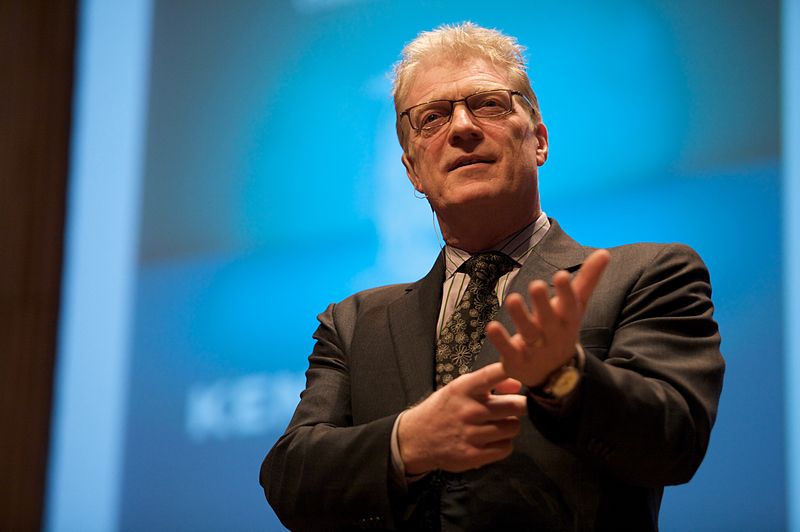
Questo pomeriggio, abbiamo ascoltato un discorso di Sir Ken Robinson.  È un esperto nell'educazione, è stato dal Regno Unito, originariamente.  Ha parlato su come migliorare la creatività nel sistema educativo.  È stato anche molto divertente!

Tuttavia, credo che la creatività, mentre è molto importante, i classici metodi di apprendimento, per esempio memorizzazione meccanica, ripetizione e la practica sistematica sono importanti anche.  Credo che dobbiamo tutti anche avere conoscenze elementari di matematica, scienze, lettura, scrittura, storia, e le arti, insieme a coltivando la creatività.


-- Josef Spalenka